


East Coast Skiffs
East Coast skiffs are traditional wooden boats historically used along Ireland’s east coast, especially around counties like Dublin, Wicklow, and Wexford. They’re typically clinker-built (overlapping planks), light, and well-suited for coastal fishing and inshore work.


Design and construction
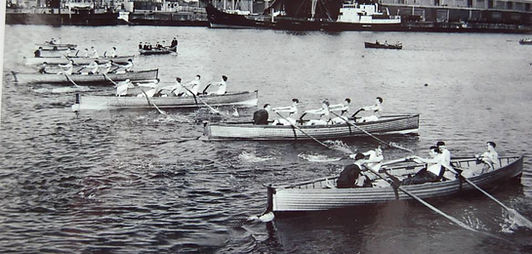
A 25-ft long, clinker-built, double-ended wooden rowing boat used for coastal rowing along the Irish east coast. Traditionally crewed by four rowers and a coxswain. The design comes from workboats once used by “hobblers”, freelance pilots competing to reach incoming ships first.

History and tradition.
In the 19th and early 20th centuries, hobblers would row these boats out to sea to meet vessels and earn piloting or cargo work. It was dangerous work and required skilled crews.
Over time, the rough-and-tumble hobbling competitions evolved into formal skiff racing and coastal rowing as a sport. Skiff rowing has a long history on the Liffey; there are two clubs already long established on the Liffey, Stella Maris and St. Patrick's.

Modern Sport of Skiff racing.
Today, East Coast Skiff rowing is organised by bodies like the East Coast Rowing Council.
Many coastal rowing clubs up and down the east coast of Ireland from Balbriggan to Wicklow and maintain fleets of East Coast Skiffs to compete in regattas each summer. Clubs like St. Patrick’s Rowing Club and Fingal Rowing Club have multiple East Coast Skiffs in active use.
To learn about our first skiff and his remarkable story, click here.